
Real estate guide · Main home
Buying your main home: costs, PTZ, capital gains
Buying the home you live in does not follow the same rules as a rental investment: no taxable rent, a capital gain exempt when you sell, access to the zero-interest loan. Here are the costs to plan for, the help you can draw on and a method for weighing up buying against renting, with dated 2026 figures.
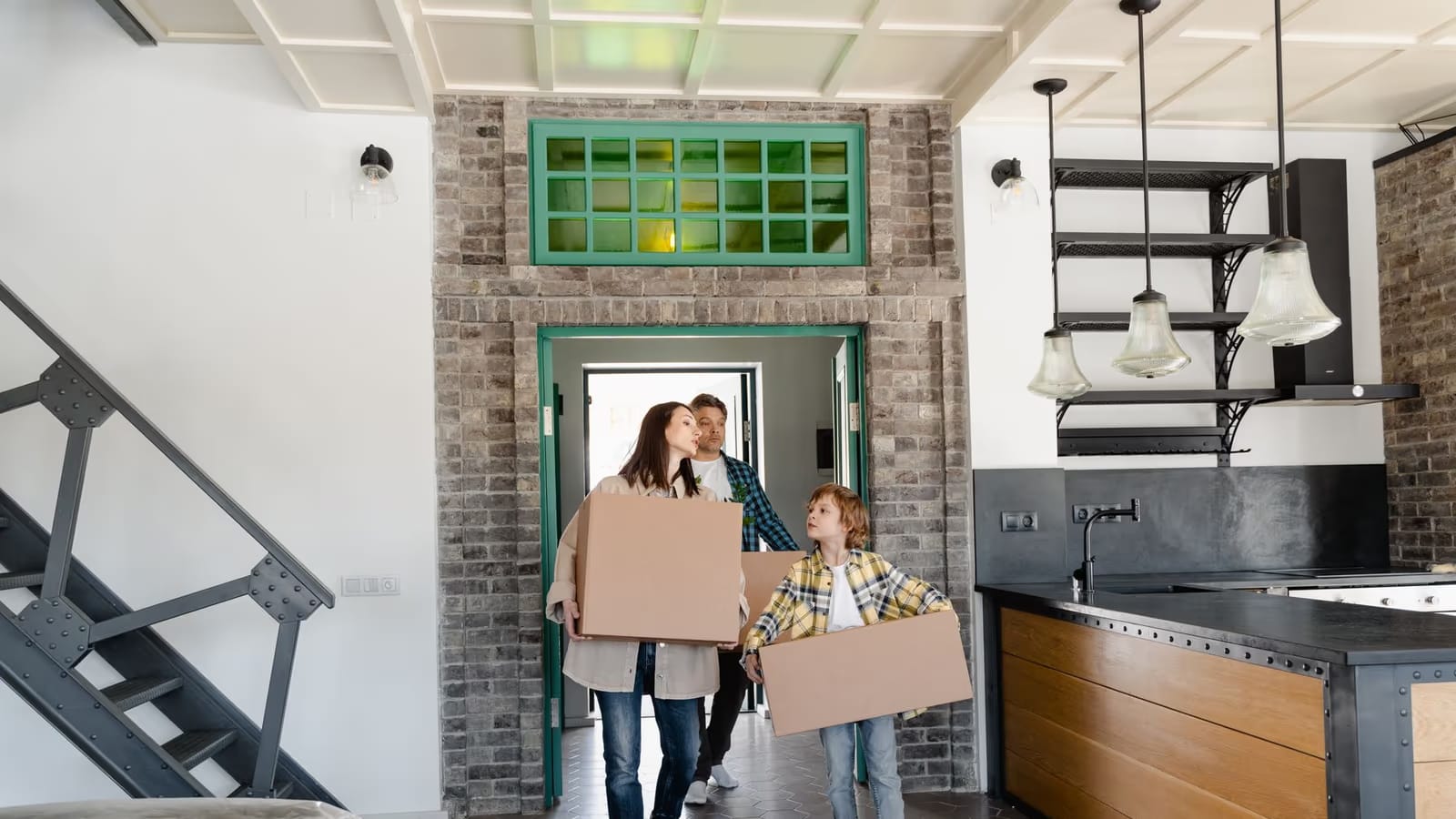
Main home or investment: why the rules differ
Your main home (résidence principale, or RP) is the property you live in for most of the year. For tax purposes it follows the opposite logic to a let property:
- it generates no taxable property income: you pay no tax on the “rent you save”;
- its capital gain is entirely exempt when you sell (art. 150 U II-1° of the CGI, the French general tax code);
- it opens access to the PTZ (available only for buying a main home) and, depending on the département, to a possible reduction in transfer duties for first-time buyers.
A let property, by contrast, opens up dedicated French regimes — micro-foncier (the flat-rate regime for unfurnished lettings), LMNP (loueur en meublé non professionnel, the non-professional furnished-letting regime) and déficit foncier (the offsetting of property losses) — but its capital gain is taxed. That structural difference changes the whole financial trade-off.
Notary fees: about 7 to 8.5% on an older property, 2-3% on a new-build
“Notary fees” (frais de notaire) are in fact acquisition costs, made up mostly of taxes rather than of the notaire’s own remuneration.
- On an older property: about 7 to 8.5% of the price. The dominant item is the transfer duty (DMTO, droits de mutation à titre onéreux): a departmental tax (up to 5.00% since the 2025 finance act, against 4.50% previously), a municipal tax of 1.20% and the state’s assessment fee. To that are added the notaire’s regulated fees (a tapering scale, about 0.8-1%), the property security contribution (0.10%) and disbursements.
- On a new-build (VEFA, bought off plan): about 2 to 3%. The property is subject to VAT at 20% (already included in the seller’s price) rather than to full DMTO: the land registration tax is only about 0.71%, hence markedly lower costs.
Estimate your notary fees
Enter the price, the type of property (older or new-build) and adjust the DMTO rate for your département for an indicative estimate.
Prix d’achat hors mobilier et hors frais d’agence.
Défaut 2026 : 5,00 % (taux majoré, 83 départements, jusqu’au 30/04/2028). 4,50 % pour les primo-accédants ou les départements n’ayant pas relevé ; 3,80 % en Indre, Hautes-Pyrénées et Mayotte. Vérifiez votre département.
Frais avancés par le notaire (documents, cadastre, formalités). Ordre de grandeur : 800 à 1 500 €.
- Frais d’acquisition estimés
- 20 120 €
- À prévoir en plus du prix d’achat.
- Part du prix d’achat
- 8,0 %
- 8 %du prix d’achat
Décomposition
- Droits de mutation (DMTO)
- 15 796 €
- Émoluments du notaire (TTC)
- 2 874 €
- Contribution de sécurité immobilière
- 250 €
- Débours (forfait)
- 1 200 €
- Total des frais
- 20 120 €
An estimate, not advice
Indicative estimate, not a contractual offer — the actual terms depend on your own situation and are set by the institution or the tax authority. Check with a professional.
Les droits de mutation (DMTO) sont votés par les conseils départementaux et varient donc d’un département à l’autre ; ils n’enrichissent pas le notaire (service-public.gouv.fr, 02/04/2025). Consultez le taux applicable sur impots.gouv.fr ou notaires.fr. Barème 2026, à revérifier à chaque loi de finances.
The zero-interest loan (PTZ) in 2026
The PTZ (prêt à taux zéro) is an interest-free loan, supported by the French state and reserved for first-time buyers (not having owned their main home over the previous two years) who are financing the home they will live in. It comes alongside a main mortgage, subject to income ceilings (the revenu fiscal de référence, the reference taxable income, for year N-2).
- New-build: from 1 April 2025 until 31 December 2027, the PTZ is extended to all new homes (flats as well as houses) across the whole country.
- Older property: possible in the less strained zones (B2 and C) for a purchase with works — substantial improvement works, and sufficient energy performance once they are done.
- Amount: the share of the project financed depends on an income band (often 20 to 50% depending on the profile and the type of home), with a possible deferred repayment period.
The capital gain on your main home is exempt
This is the decisive tax advantage: when you sell your main home, the gain you make is entirely exempt from income tax and from social levies (17.2%), under art. 150 U II-1° of the CGI, with no minimum holding period. Immediate and necessary outbuildings sold at the same time are exempt as well.
The one condition: the property must be your actual main home on the day of the sale. If you have moved out before selling, the exemption can still be maintained if the sale takes place within a “normal period” (in principle a year at most in ordinary circumstances) and if the home has been neither let nor occupied free of charge in the meantime. A property already let, or left empty without reason on the day of the sale, loses the exemption. This tolerance is assessed case by case by the tax authorities.
Deposit, HCSF limits and borrower insurance
Personal deposit. No text sets a legal minimum, and the HCSF limits do not bear on the deposit: they target the debt-service ratio and the loan term. Each bank therefore sets its own requirement and judges it alongside the rest of the application. What the deposit is there to cover is concrete, on the other hand: the costs that come on top of the advertised price — transfer duties and the notaire’s fees, the guarantee, arrangement fees. The larger the deposit, the smaller the amount borrowed and the debt-service ratio, which usually improves the terms you are offered. What your lender will agree to fold into the financing is a question to put offer by offer, rather than aiming at a percentage.
HCSF rules (unchanged in 2026). The HCSF (Haut Conseil de stabilité financière, France’s financial-stability authority) keeps financing within limits: a maximum debt-service ratio of 35% of income, insurance included, and a loan term capped at 25 years. Banks have a margin of flexibility covering 20% of their quarterly production of new loans: at least 70% of that margin must go to the purchase of a main home, of which at least 30% to first-time buyers; the rest is free to use. That is a lender’s latitude, not a borrower’s right (source: HCSF, decision D-HCSF-2021-7 as amended in 2023 — checked 08/2026).
Borrower insurance. Required in practice (death, disability…), it weighs heavily on the total cost. The loi Lemoine lets you cancel or switch it at any time and free of charge, and removes the medical questionnaire where the share insured per person is below €200,000 and the loan is repaid before the borrower’s 60th birthday (cumulative conditions, worth checking again). Choosing an insurer other than your own bank (délégation d’assurance) is often the first lever for savings. We go further into this in the guide on optimising your mortgage.
Taxe foncière, to budget for from the outset
Unlike the taxe d’habitation (the residence tax, abolished on main homes), the taxe foncière — the annual local property tax — is still owed each year by whoever owns the property on 1 January, including on their own main home. It is worked out from the cadastral rental value (revalued each year) and the rates voted by local authorities: the amount therefore varies widely from one municipality to the next. A temporary two-year exemption may apply to new-build construction, subject to conditions and to the municipality’s decision. Find out the local rate before you buy: it is a recurring annual charge.
Buying or renting: how to weigh it up
There is no official threshold that settles the debate: it is a question of how long you hold the property, and of costs. To compare honestly, set side by side:
On the buying side
- Notary fees (about 7 to 8.5% on an older property) to amortise
- Any estate agency fees
- The cost of the loan: interest + insurance
- Taxe foncière + service charges / upkeep
- Capital tied up in the deposit
What buying brings
- Building up an asset
- A capital gain exempt on resale
- No more rent once the loan is repaid
- Residential stability
A common-sense rule: the longer your horizon (5 to 8 years and beyond is the figure usually quoted), the more buying tends to work out, because the fixed entry costs (notary, guarantee) are spread over time. Below that, the risk is selling before you have “amortised” them. Put a figure on your own case with our property calculators (borrowing capacity, monthly payment, notary fees).
Frequently asked questions
What are the notary fees when buying a main home?
They are really “acquisition costs”. On an older property they come to around 7 to 8.5% of the price, because they are dominated by the transfer duties (DMTO) collected by the state and by local authorities. On a new-build (VEFA, bought off plan) they fall to around 2 to 3%, because the property is subject to VAT (already included in the price) rather than to full DMTO. The DMTO rate varies from one département to the next: since the 2025 finance act the departmental tax can reach 5.00% (against 4.50% previously) for deeds signed between 1 April 2025 and 30 April 2028, but not every département has voted the increase. Check the applicable rate on the official 2026 DMTO document (impots.gouv.fr) or with your notaire. Orders of magnitude, checked 08/2026.
Is the capital gain on my main home taxed?
No. The gain made when you sell your main home is entirely exempt from income tax and from social levies (art. 150 U, II-1° of the French general tax code), with no minimum holding period, provided the property really is your main home on the day of the sale. This is the major tax advantage over a let property, whose gain is taxed (19% income tax + 17.2% social levies before allowances). If you move out before selling, the exemption can be maintained where the sale takes place within a “normal period” (in principle a year at most), with the home neither let nor occupied free of charge in the meantime — a tolerance assessed case by case by the tax authorities. Source: BOFiP / service-public.gouv.fr, checked 07/2026.
Who can get the zero-interest loan (PTZ) in 2026?
The PTZ is reserved for first-time buyers — people who have not owned their main home over the previous two years — who are buying a home to live in, subject to income ceilings (based on the revenu fiscal de référence, the reference taxable income, for year N-2). From 1 April 2025 until 31 December 2027 the PTZ is extended to all new homes (flats as well as houses) across the whole country. On older property it remains possible in the less strained zones (B2 and C) for a purchase involving substantial improvement works (with an energy performance requirement). It is an interest-free loan, taken alongside a main mortgage. The income schedules and financing shares are subject to revision: check them on service-public.gouv.fr / with the ANIL. Checked 07/2026.
Do you need a personal deposit to buy your main home?
No text sets a legal minimum, and the HCSF limits do not bear on the deposit: they target the debt-service ratio (35% of net income, insurance included) and the loan term (25 years). Each bank therefore sets its own requirement and judges it alongside the rest of the application. What the deposit is there to cover is concrete, on the other hand: the costs that come on top of the advertised price — transfer duties and the notaire’s fees, the guarantee, arrangement fees. What a lender will agree to fold into the financing is a question to put offer by offer, rather than aiming at a percentage.
Do you pay taxe foncière on your main home?
Yes. The taxe foncière is owed each year by whoever owns the property on 1 January, including on their own main home — unlike the taxe d’habitation, which has been abolished on main homes. It is calculated from the cadastral rental value of the property (revalued each year) and the rates voted by local authorities: the amount therefore varies widely from one municipality to the next, and should be budgeted for from the moment you buy. A temporary two-year exemption may apply to new-build construction, subject to conditions and to the municipality’s decision. Checked 07/2026.